Books · Christmas · family · Memories · Mom · My Thoughts

Holiday Magic: A Mid-Summer Touch of Christmas

Holiday Magic

Do you need some holiday magic right now? While the July heat has us all reaching for extra ice in our tea, my thoughts have been drifting toward a different kind of warmth—the kind that comes from a crackling fireplace, the scent of fresh pine, and the chaotic joy of a family gathered together.

They say it’s never too early to start celebrating, so today I’m bringing a little “Christmas in July” to my blog. I’m featuring my memoir, Hair on Fire: A Heartwarming & Humorous Christmas Memoir. This book is a collection of my favorite festive memories—from the spiritual beauty of the season to those hilarious, “only-in-our-family” moments that make the holidays so unforgettable.

Whether you’re a long-time reader or new to my stories, I hope this snippet brings a smile to your face and a bit of holiday spirit to your summer day.

Cutting Down a Christmas Tree - Holiday Magic

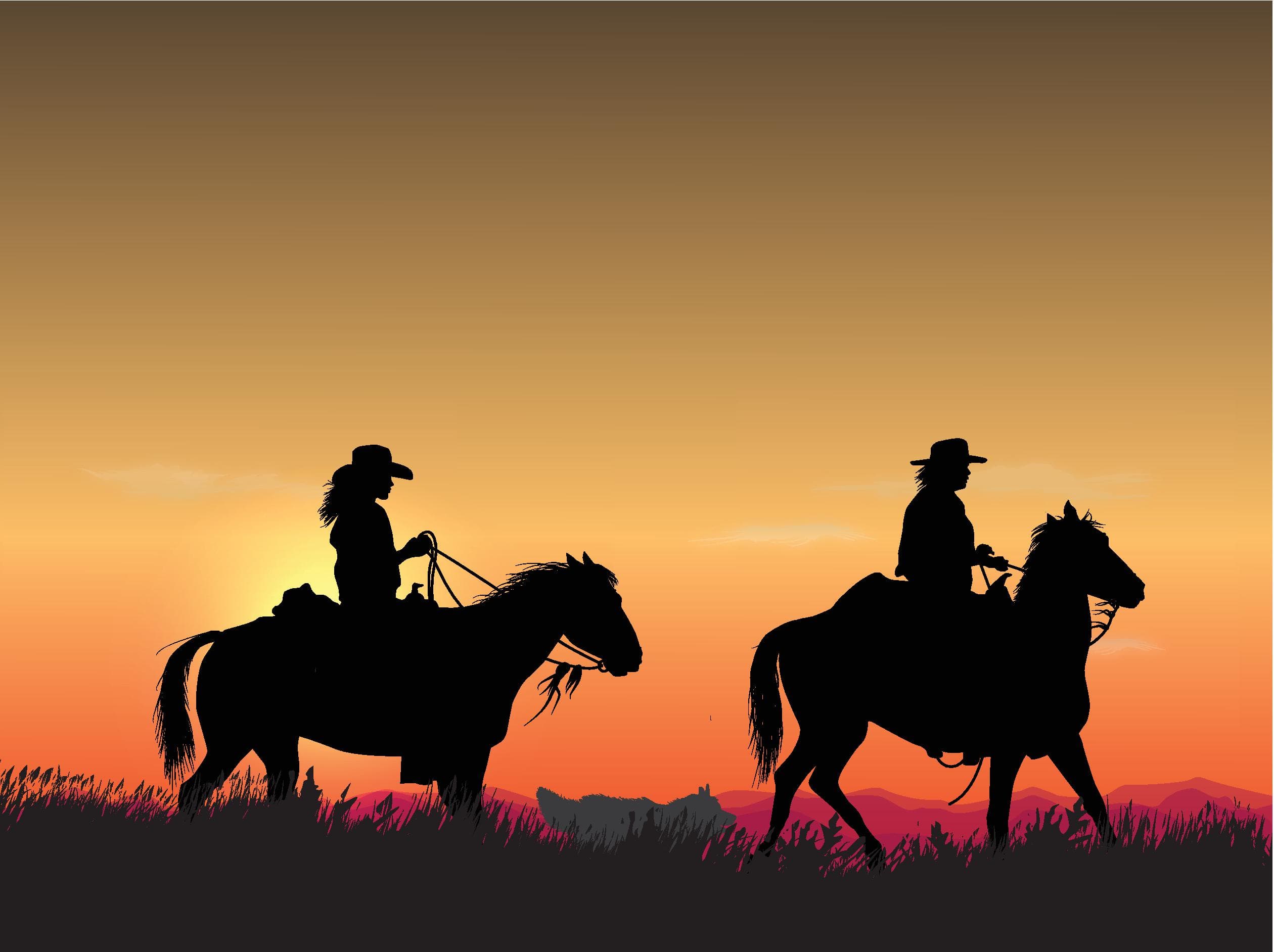
We never bought a Christmas tree when I was growing up. Why would we? Growing up in southeastern Colorado, we could choose a tree on our family ranch to become our star Christmas tree every year —free for the selection and lots of fun.

Mom and I would start looking for the year’s Christmas tree in October, during hunting season, as we walked the canyons, measuring trees in our minds.

“There’s the perfect one.” Mom pointed to a small three-foot piñon pine tree that she wanted to put up on the coffee table. She went on and on about the virtues of a small tree. Dad, Bub, my brother, and I moaned and groaned. Oh, not this again, but we knew her—she always wanted a small tree, and we didn’t.

Driving a little farther near the canyon, I spotted a regal six-foot piñon pine tree and exclaimed, “Here it is! Let’s mark this one. This is it, for sure—our Christmas tree for this year.”

Dad and Bub nodded their heads in agreement. We continued our lighthearted banter back and forth about small trees versus big trees. Then we would continue our task of hunting for deer to have venison for the winter. This routine repeated itself throughout the months of October and November and into the beginning of December if Dad or Bub didn’t get a deer. With the three of us outnumbering her, Mom often lost the tree size debate.

One year, though, we three “big Christmas tree lovers” overdid ourselves.

It was early December, and the time had come to cut down our tree. For some reason, Mom didn’t go—too busy baking our fudge, divinity, and other Christmas goodies. Without her there, the three of us could choose a big tree that year with no fuss. We scouted out the ones I had mentally marked throughout the fall, but Dad and Bub spied one they wanted that wasn’t on the list. The saw came out, and they cut it down as a team, laughing about how Mom would react.

Yes, it looked fabulous out on the ranch against the deep blue sky and the snow drifts surrounding it. We admired our tree and laughed about Mom’s possible response. What added to the joy of our selection—it was our first year in our new home with much higher ceilings, so the taller the tree, the better.

As we drove home, we prepared for Mom’s comments, rehearsing our answers to her probing questions. We drove up to the front of our house and backed the pickup into the driveway so it would be easier to get the tree out. Already Dad and Bub had lamented about the sticky sap on their hands.

My part of the plan was to distract Mom while the guys brought the tree up. I hurried up the walk to get to Mom before she could see what we brought. She stuck her head out the door, quizzing me about the size. Kidding her, I replied, “It’s your size.” Her laugh told me she didn’t believe it.

Normally Dad could carry our tree by himself, but it took both Dad and Bub to carry this one up the sidewalk and lay it on the front porch. As I stood measuring the tree in my mind, the tree seemed to go on forever.

Dad retrieved his hacksaw from the pickup and cut the bottom of the stump off evenly, a usual practice to fit it in the tree stand. The savory pine sap aroma filled the air. Still on its side, he easily slid it into the stand, tightened the bolts, and they stood it up. In our excitement to find the best tree, and thinking our ceiling higher than it was, we made a major mistake!

I held the screen door open, but already I realized we were    in trouble. Bub and Dad wrestled to get the tree through the door. They tried to carry it upright in the stand, but it wouldn’t fit, so they laid it out lengthwise and finally shoved it through. Thank God it was freshly cut or pine needles would have scattered everywhere!

Mom watched this show with amusement but was wise enough not to say anything. Dad and Bub set the stand on the floor by the front window, which Mom had cleared to showcase our tree to the passing traffic, and raised the tree.

All four of us gasped at the same time—the tree reached the ceiling and curled down at least a foot! What were we to do now?

Mom finally chimed in, “Don’t forget to leave room for the star on top.”

Dad took control. “That’s easily fixed.” He and Bub wrestled the tree out the door again. Once it was on the porch, Dad cut a foot and a half off the stump of the tree, and a few lower branches, and brought the shortened tree in and set it up. Dad’s precision cut allowed just enough room for our traditional angel on top.

We stood back and admired our beautiful six-foot-plus piñon pine tree. Already its aromatic fragrance filled the room. Our decorations were stacked in boxes nearby, so now the fun of decorating began.

After our sigh of relief and chuckles, Mom took one last look at our tree before decorating and said, “Next year I’m for sure going with you three so we can get a smaller tree.”

We all laughed, happy with our selection.

© Horner Publishing Company 2023

In 2024, I wrote in my blog about where this advertising idea of Christmas in July came from and shared another chapter of this book:

Do you cut down your own tree now? Did you do it as a child? Any favorite memories? What holiday magic did you enjoy?

Larada Horner-Miller - holiday magic
I believe in holiday magic all year long!


Don’t let the summer heat keep you from the holiday spirit. For a limited time starting July 13, you can grab your copy of Hair on Fire: A Heartwarming and Humorous Christmas Memoir for just $9.50 (normally $15.00)!

Whether you’re looking for a laugh or a touch of seasonal magic to brighten your July, this is the perfect time to add this collection of memories to your shelf, holiday magic ahead of time.

Click here to buy your copy of Hair on Fire for only $9.50!


Alliance of Independent Authors

Professional Reader

My Newest Books

Time Measured Out!: Navigating Life’s Journey Through Poetry, Book #2 e-book

ISBN – 9798989688654

$3.99 for limited time

is my truth universal? book cover

Is My Truth Universal?: A Woman’s Poetic Odyssey e-book

ISBN – 979-8989688623

ALWAYS FREE

Was It a Dream? book cover

Was It a Dream?: Navigating Life’s Journey Through Poetry, Book #1 – e-book

ISBN – 979-8989688630

 $3.99


Buy My Audio Books:

This Tumbleweed Landed

Let Me Tell You a Story 

Hair on Fire: A Heartwarming & Humorous Memoir Audiobook


[mc4wp_form id=3447]

Books · My Thoughts

May—Get Caught Reading Month? But Are You a Reader?

Get caught reading  - reader

May is more than half over, but it’s “Get Caught Reading Month!” The question is: are you a reader? Have you got caught reading? Do you read?

For eleven years, I’ve been in the self-publishing business. At first, I had no plans on continuing, but I had such a great response to my first book, This Tumbleweed Landed, I continued.

Now eleven years later, I have written nine books, I have another one to my editor and several in the queue. I have recorded three audiobooks and published three cookbooks. It feels like a lot done, but I wonder—are you a reader? Do you like memoirs, stories of rural American, poetry and Christmas memories? Can you relate to a square dance caller who volunteered for the Navy at seventeen and then saw the world calling squares?

Have you read one or any of my books?

Seven of my books! reader
Seven of my Books!

I’m excited to continue my four-book poetry series. My editor has my second book now, editing it: Time Measure Out!: Navigating Life’s Journey Through Poetry.

But are you a reader? My reading adventure goes back to early childhood memories of reading and rereading Nancy Drew mysteries on the front porch sitting on a swing. Reading always came easy for me. Did it for you? I know some people struggle with reading.

Both of my parents read, but I followed my mother’s reading choices in junior high. I’ll never forget reading Margaret Mitchell’s book, Gone with the Wind. I have such a vivid imagination, I easily pictured the whole book. Then when I saw the three hour and fifty-eight minute movie, I got lost in the scenes of Rhett and Scarlett and didn’t want it to end.

When I went to Colorado State University, I majored in English and read the classics. Shakespeare, Milton and Dickens became my new favorite authors. Before this, I had little exposure to the classics, but this gave me a great opportunity to not only read but study them. What a treat!

I have continued reading my whole life. When Tony Hillerman mysteries came out, I read every one starting with The Blessing Way. Mom and I also enjoyed Sue Grafton’s Kinsey Millhone alphavet mystery series—starting with A is for Alibi.

Mom and I also enjoyed the Don Coldsmith series, starting with The Trail of the Spanish Bit.

One summer while traveling in California, my ex-husband and I read some of John Steinbeck’s books—Grapes of Wrath is a must read!

Then I found Jodi Piccoult, an author who has dealt with many social issues we have in her novels like My Sister’s Keeper. She now has written twenty-five books and is my heroine!

During the pandemic, my husband, Lin, and I read some of C. S. Lewis’ books. On Lin’s suggestion, I reread the Narnia Tales in chronological order. Those books ignite my childlike imagination for sure and Aslan says it all! We also read A Grief Observed about the loss of his wife—a gripping tale.

In the last several years, I’ve focused on recovery and the spiritual writings of Fr. Richard Rohr and N. T. Wright.

So you can see a pattern here—I chose an author then read everything they wrote. Through this method of reading, I became familiar with that author and they became a personal friend. That’s what I’m suggesting to you today—get caught reading one of my books this month or any month! Then read more and sample the variety I write. If you do, send me the picture and I’ll post it on my website!


My Newest Books


Buy My Audio Books:

This Tumbleweed Landed

Let Me Tell You a Story 

Hair on Fire: A Heartwarming & Humorous Memoir Audiobook


[mc4wp_form id=3447]

Books · My Thoughts

Celebrate National Read a Book Day: September 6, 2024!

Woman reading - National Read a Book Day

National Read a Book Day was Friday, September 6, and I want to share what book I’m reading with you. I haven’t finished it yet, but it’s a page-turner! Why is reading so important to me? What are you reading?

Right now, my newest book is The Cemetery of Untold Stories by Julia Alvarez. I saw her at the Santa Fe International Literary Festival in May and bought it. She enticed me with the title and her sharing about this unusual title.

The protagonist, a writer, has numerous unfinished manuscripts she plans to bury in the cemetery of untold stories. Unusual concept? Yes, but as a writer I relate! I know there’s twists and turns coming and I wait with anticipation!

Stories matter - National Read a Book Day

For decades, two of my manuscripts lay in my computer, whispering to me, “Finish me. Come back. Please come back!” Finally, I did and self-published them in 2014 and 2015. But I still have some I’ve let sit and not finish yet.

Right now, I have several books in the queue: three more poetry books in my Navigating Life’s Journey Through Poetry series, three-four in a poetry book series—poems I wrote with my students, a how to write a biography book, another book of This Tumbleweed Landed poems and a women’s fiction I wrote in 2016.

Here’s a list of poems I want to add to the continuation of This Tumbleweed Landed, #2:

  • Dad’s smooth swing of saddle up on a horse
  • Grandma Dickerson’s embroidered edge for towels & washcloths
  • Mom’s embroidery of t-towels
  • My hope chest
  • 435 cattle—12 trucks inspected and lined up when we sold out because of the drought
  • Prince Albert in a can all over the ranch
  • The distinctive ring of the school bell
  • Mom’s cedar chest
  • “Taking up food” vs. serving something in a pan
  • Granddad & Grandma Horner’s slide night after one of their trips
  • Dad telling Maynard Bowen dancing was like clapping your feet
  • Folsom Falls adventures
  • Mom’s Christmas fruitcake with Granddad Horner’s sherry
  • Phrases from Mom and Dad – loaded for bear, faunching at the bit, it’s raining like a cow peeing on a flat rock
  • Doing the Bunny Hop at midnight at the Branson dances as a child
  • Dad & Millard Warner—best friends in high school, then us living next door to each other
  • Travis Patton—exchanged water for fresh eggs

I have a couple of short stories that I’ve played with and had fun writing, but I haven’t published yet. So many unfinished stories to share!

Reading has been a passion of mine for most of my life. From the moment I learned that letters strung together created words, I saw worlds unfold before me. I remember sitting on our porch swing in the summer and reading. Because we didn’t have a large family library, I depended on our school library and the library in Trinidad. So, I re-read Nancy Drew books and thoroughly enjoyed them, even when I knew what was coming.

I have kept at least one book going my whole life. Right now, I have three going:

  • The Cemetery of Untold Stories, Julia Alvarez
  • Paul, A Biography, N. T. Wright
  • The Language of Life: A Festival of Poetry, Bill Moyer

Finally, are you a reader? What are you reading now? Are you reading more than one book?


Multiple Christian Book Giveaway – until Tuesday, September 10, 2024!


Podcasts & My Interviews


Buy My Audio Books:

This Tumbleweed Landed

This Tumbleweed Landed audiobook cover

Let Me Tell You a Story 

Let Me Tell You a Story audiobook cover

Hair on Fire: A Heartwarming & Humorous Memoir Audiobook

Hair on Fire: A Heartwarming & Humorous Christmas Memoir audiobook cover


[mc4wp_form id=3447]

Books · My Books · My Thoughts · poetry · Self-publishing

A Dream About George Strait or Not? – My New Poetry Book!

Dream

A dream I had of George Strait inspired me to write a poem many years ago. Finally, I am in the finally stages of publishing it in my first book in a four-book series named Navigating Life’s Journey Through Poetry. The title of this book is Was It a Dream?.

To sample the flavor of this book, here’s the introduction to it, explaining its inception.

“Instructions for living a life:

Pay attention.

Be astonished.

Tell about it.”

~Mary Oliver, “Sometimes”[1]

“A poet?” I questioned.

“Yes, you’re a poet!” Lin, my husband, responded enthusiastically.

While lounging in our hot tub one beautiful New Mexico evening last year, Lin asked me what word I’d use to describe myself in my writing. I mulled it over in my mind. Did he mean genre? Author? Writer? I don’t even remember what I said, but his answer floored me—”Poet!”

I thought, Four of my seven published books feature my poetry. I’ve written a lot of poems, but I’m not Shakespeare or Milton. I don’t rhyme and have meter in my poetry. Could I be a poet?

Even though it was something so familiar and deep-seated in me that came to light, I had needed someone else to identify it, to identify who I really was—a poet!

After this refreshing discovery, I ran to our storage shed to find all my old poems. I knew exactly where my journals were. I made a beeline to the box, and there they were! After dusting them off, I marveled at the work I hadn’t looked at in years, in decades. That joyous revelation—that I was not just a writer but also a poet—changed my life as an author.

As I mused over Mary Oliver’s poetic “Instructions for living a life,” I realized that, yes, I have “paid attention” by retelling my life’s journey through poetry for years, yet really didn’t realize it until I put this poetry series together. This first book begins with a solitary poem written in 1986 that starts with a trip to the Mayan ruin in Cobá, Mexico and ends with me in Spokane, Washington doing laundry in a laundromat, “paying attention” to a child’s first steps.

While that first poem focuses on a travel adventure, this whole book will take you on a journey through my life in the 80s and 90s, when I was in my late thirties and early forties, an unsettled time in my life. I reveal a variety of my vulnerable “heart hurts,” like being childless at forty. That was monumental for me, a big piece of my pain.

Looking back at these poems, I am astonished at how deeply vulnerable I am. When I wrote these poems, it was to process my life at that specific moment, not to share my innermost thoughts with the world.

Because of that, there are so many different key elements throughout: the pain, the celebration, the wonder, the astonishment, as Mary Oliver says. So, if you’re looking for a central theme, my collection may upset you because I share a hodgepodge of life events, but it is my story.

My first wedding was September 9, 1973, and at that point in my life, I did not see myself as a writer much less a poet. I wrote nothing—poetry or prose. I was still in pain from some past traumas, so I couldn’t see the trees for the forest.

Because of that, I struggled through that relationship, and we ended up divorcing in 1980. For eight years, I actively struggled with alcoholism. That sounds like a short span of time, but for women, the average length of their drinking years is seven years, so I was right there. During those years, I didn’t write any poetry.

From 1982 to 1986, I attended Colorado State University—forty years ago! After a false start for my freshman year in Occupational Therapy, I switched my major to English with a teaching concentration two weeks into the semester and walked into a class with the professor reading Beowulf in Old English. It felt like a foreign language, but I persevered. I was twenty-eight years old when I went to the university for the first time, so I had forgotten anything I had learned in high school, not that I had a very strong background in literature to begin with.

At the beginning of that first semester, I remember sitting in an English literature class and the professor asked a probing question about sirens. Having no clue what a siren was, I sat with my hand firmly not raised, but because of my good-student-mindset, I almost responded anyway. When a student spouted off the answer sought for, my mouth dropped! My only reference to a siren was a noisy alarm on emergency equipment. Sirens on the rocks, warning sailors. I had no idea, and apparently, I hadn’t studied the passage for the class that day enough.

From then on, I knuckled down and prepared for each class thoroughly, realizing I almost had an embarrassing moment in front of my peers ten years younger than me.

It was in those English and American literature classes that I found a poetry. I stumbled through the poetry sections of my classes, in awe of the meaning the professors gleaned from the words lined up in stanzas.

In my upper-level classes, I eagerly absorbed the Shakespeare and Milton tomes and internalized their influence, unknowingly preparing to embrace my own inner poet years later.

There at the university, I started writing for my education classes and realized through good grades and positive comments made by different professors that I certainly did have the ability to write an educational paper. Though I never thought I’d be publishing not only one, but four poetry books in this series, and more.

In 1986, I graduated in the top four percent of my class with a B.A. in Education, a minor in Spanish, and concentration in Education.

I got sober on December 22, 1988. I’ve often thought that my poetry writing paralleled my recovery, but it was in 1986 that I wrote that first poem about Cobá, which I find so rich. Writing that poem and graduating ignited something in me that year, and that was the first glimmer I had that I was a poet.

I can see now that already I was starting to see myself as a poet and noting life.  

Four of my seven published books feature poetry and prose, so it’s not a new genre for me. While teaching middle school language arts and literature, I taught a poetry unit every year, but I didn’t take myself seriously as a poet. I was a middle school teacher, but I only dabbled in poetry.

I also participated as a fellow in the Rio Grande Writing Project, an affiliate of the National Writing Project, a professional development program for teachers. It promoted writing “across the curriculum”—in math, social studies, science, and electives, as well as language arts and literature classes.

During this time, I followed the training of Nancy Atwell’s book, In the Middle, where I learned about “Writing and Reading Workshop,” her successful plan for teaching writing and reading to middle school students. This book changed my classroom. I wrote daily with my students at the beginning of class. I would write a prompt on the board before class so the students knew to sit down, open their writing notebooks, copy the prompt, and respond. Each day, I timed it for seven minutes. When I finished my daily teacher chores, like attendance, I grabbed my writing journal and a chair near a student and wrote. I wanted them to see me as a writer and often I chose poetry to express myself.

By focusing on the writing process, I grounded this writing time in Natalie Goldberg’s book, Writing Down the Bones, and introduced my students to her preferred writing practice, a timed free write. She listed seven things to consider for this time:

  • 1.  Keep your hand moving. No matter what, don’t stop . . .
  • 2.  Don’t cross out.
  • 3.  Don’t worry about spelling, punctuation, or grammar.
  • 4.  Lose control. Let it rip . . .
  • 5.  Don’t think. Don’t get logical.
  • 6.  Go for the jugular[2]
  • 7.  You are free to write the worst junk in the world (I added, “in the universe!”)

Can you imagine a writing teacher telling her students not to worry about spelling, punctuation, or grammar? My students loved it, and their writing blossomed. Then when the poetry unit came up, I guided them through haikus, free verse, and self-expression. It became a favorite of theirs and mine.

Yet at this time, it was a nominal gesture! I didn’t feel like a writer, much less a poet. That identity came years later.

Then something happened! Poetry became the genre I ran to when life tilted in ways I had no control over, good or bad—my mom’s death, the coronavirus pandemic, life!

Almost forty years after writing my first poem, I gathered all my poems together and realized I had written enough poetry to fill at least four poetry books. After taking Natalie Goldberg’s writing practice class during the pandemic and reading her book, Three Simple Lines: A Writer’s Pilgrimage into the Heart and Homeland of Haiku, I’ve currently moved to haikus to express my life, yet I still write free verse occasionally.

 Today I write poetry when I’m happy; I write poetry when I’m sad. I write about what’s important and about what’s trivial.

This collection of poetry, spanning the first fifteen years of my poetry writing, takes a peek into me and my world. From the luscious green jungles of Mexico to the beautiful purple orange sunsets of New Mexico. From losing my dad and my second and third husbands to living a life without my own child.

Today, several famous poets influence me: contemporaries Mary Oliver and Billy Collins, classics William Shakespeare and Emily Dickinson, and Native Americans Joy Harjo and Louise Erdrich.

Some of those influences are evident in my poems. Magical realism from my Spanish literature classes seeped into my poem on Cobá, for instance. George Strait, my country and western hero, shows up in the title poem (“Was it a Dream?”), doing what I love to do besides write—dance! His advice became my motto for life.

But it was when I found Mary Oliver’s “Instructions for living a life” in her poem, “Sometimes” that I realized I had followed her directions in my poetry to the tee. She was an influence without my even knowing!

So please, step into my world of poetry and walk through my journey with me in this first book as I look at personal growth, reflection, and the twists and turns life can make.

Larada Horner-Miller, Was It A Dream?: Navigating My Life Through Poetry, (Horner Publishing Company, 2024): ix-xv.

So many of my books sat for years on a shelf, in a folder on my computer, unpublished. I wrote them then put the notebooks away. As life unfolded, I faced joys and sorrows and wrote poetry. That’s how I navigated my life—with words. With Lin’s prompting, I knew I had to publish this book and this series. Let me know what you think.


[1] Mary Oliver, Devotions, (Penguin Press, 2017), 105.

[2] Natalie Goldberg, Writing Down the Bones (Shambhala Publications, Inc., 1986), 8.


Audiobooks Sale – August 15 – 31 – 25% Off:

This Tumbleweed Landed

This Tumbleweed Landed audiobook cover

Let Me Tell You a Story 

Let Me Tell You a Story audiobook cover

Hair on Fire: A Heartwarming & Humorous Memoir Audiobook

Hair on Fire: A Heartwarming & Humorous Christmas Memoir audiobook cover


[mc4wp_form id=3447]