Books · family · My Thoughts · Ranching

Truth and Fiction: My Next Two Books!

Cowboys working cattle—truth

Truth and fiction! My next two books again centered on ranch life and my family through truthful nonfiction and historical fiction. One was truth—how my granddad put our family ranch together during the depression when others were losing theirs. The other was historical fiction where I fictionalized a story I had heard my whole life.

Let Me Tell You a  Story—Truthful nonfiction. Truth
Dad on the cover!

The Truthful Nonfiction–Let Me Tell You a Story

My dad celebrated his 75th birthday on March 20, 1993. So, Mom and I worked together on producing a chapbook of the story of how our family ranch was put together for his gift, titled Let Me Tell You a Story. Dad dictated the unique stories to Mom about the technique Granddad used to put together our ranch during a time when many lost their homesteads. Dad, the master storyteller, relished the telling and retelling of these familiar family stories. Then I typed them up on a 2E Apple computer with floppy disks. Then Dad helped me edit it, which was hilarious for this ole cowboy—he didn’t trust computers but immediately saw their usefulness. As a finishing touch, we added pictures to it.

Originally, I had copies printed for only our immediate family members and twenty-five copies for a classroom set for my literature class. Again, this lay aside for over twenty years. In 2016, I self-published it, again. It has become a favorite in Etsy Shop, Larada’s Reading Loft.

To tell the truth, this small chapbook warms my heart each time I reach for it because Dad’s words live on in it.

When Will Papa Get Home? Historical Fiction. Truth
The Philly Place

The Historical Fiction—When Will Papa Get Home?

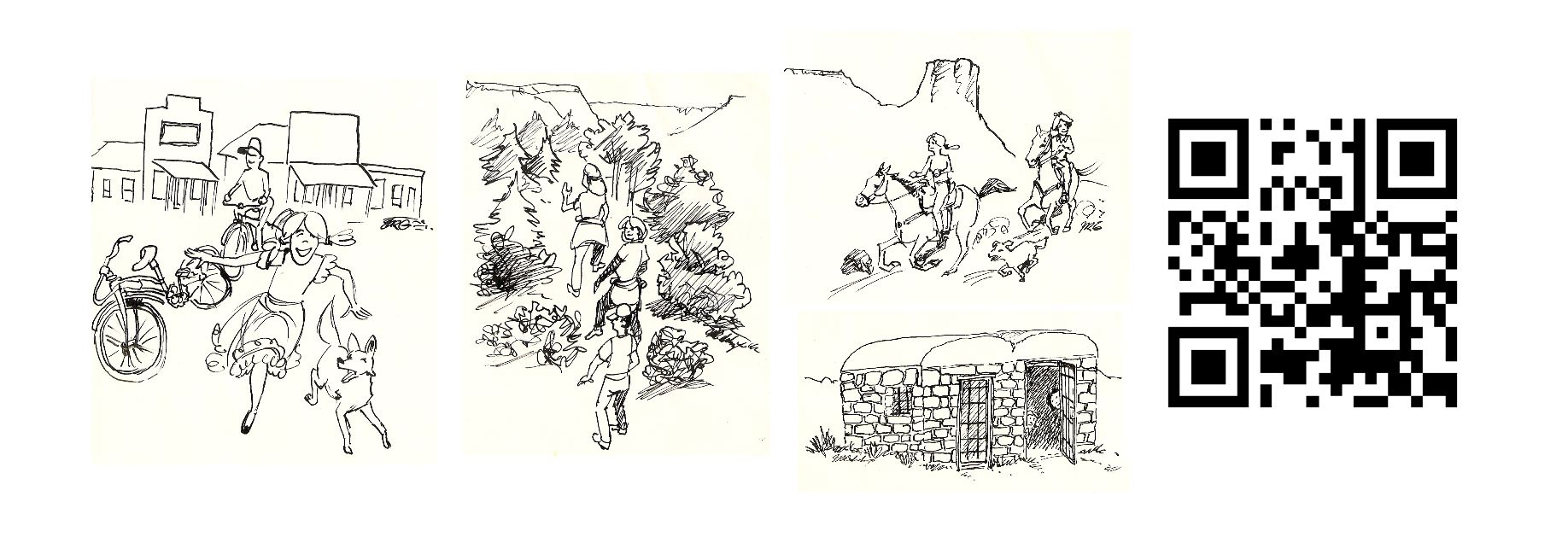
In 1986, I taught my first year in Denver, Colorado, and the school district lent me a 2E Apple computer for the summer. I visited my parents on our family ranch, and we ventured to my favorite homestead on the place, the Philly Place. It got its name from the original owner, Philadelphia Cardenas. I had been there many times, but this time as I was leaving the homestead, I stopped out of what was the living room, looked down and found a blue marble.

I asked Dad about it, but he did not know. “Probably some arrowhead hunters out here with kids.”

I stuck that marble in my pocket, went back to Denver, and the story came pouring out of me, based on a story I had heard my whole life, told by Dad in Let Me Tell You a Story:

Charlie Garlutzo was working for the County Sheriff Department. Bob Gleason had “Phillie” (Philadelphio Cardenas) up on cow theft. Charlie got the one hundred and twenty acres bought from Phillie for seven- teen dollars and fifty cents an acre while he was scared about the charges. Garlutzo had the choice of selling the land to either Horner or Doherty. He chose to sell it to Horner.

Phillie was sentenced for a one-year term but got out in seven months for good behavior. Had Garlutzo not got the land bought from Phillie when he was scared, he would have been right back out there, back in business.

Larada Horner-Miller, Let Me Tell You a Story ( 2016): 15.

So, I fictionalized this true historical story and made the supposed culprit a horse thief with a twist. I told the story through the eyes of the daughter of the man accused of the thievery, and the blue marble belonged to her. The sheriff falsely accused her papa, and the story unfolds. Through extensive research, I wove their story of immigration from Mexico to the high desert prairie of southeastern Colorado. In doing that, I discovered how much I liked research and dove in. I researched adobe house building and much more.

For this book, I laid it aside for almost thirty years! After my successful stab at self-publishing, I released When Will Papa Get Home? in 2015. My aunt now owns the Phillie Place, and she gave me and my brother to revisit it to take pictures. So I took the picture on the cover. We had a delightful day rummaging through the ruins and marveling at how much of the original homestead was still there.

So, I featured truth and historical fiction in these two books. Retelling my family history in the one book encouraged me to jump into the historical fiction in the next. Enjoying both genres, I loved celebrating my country roots and heritage.

Do you have family stories? Truth or fiction? Share your thoughts! (Scroll down below!0


Coronavirus Reflections: Bitter or Better? Truth

Visit my website to find out about my new book, Coronavirus Reflections: Bitter or Better? and my other five books and three cookbooks: https://laradasbooks.com

Book Production · Books · Marshall Flippo · My Thoughts

Interviews—Do Them Successfully!

Women talking on the phone - interviews

“Interview someone.” Yesterday’s assignment for this challenge reminded me of an amazing series of interviews I did. I orchestrated forty hours of interviews from 2017 to 2018 for my fourth book and learned so much. In 2017, a writing project fell into my lap, the biography of the most famous square dance caller in the world, Marshall Flippo. He lived in Tucson, Arizona; I live close to Albuquerque, New Mexico. We did a face-to-face interview to start with in October 2017 in Tucson, then one more in March 2018. So, most of those interviews we did over the phone.

Larada & Marshall Flippo
Larada & Marshal Flippo

My Suggestions for successful interviews

  1. Be in a quiet space for the recordings. The second face-to-face interview we did in a restaurant with lots of background noise. Even though I did mosts interviews at home, several had interior background noise from my cat and my husband, but it was mostly undisturbed.
  2. Set a specific time and length of time. Think of the age of the talker and set the length accordingly. Flippo was 90 years old, so we did an hour each week.
  3. Have specific goals and questions prepared ahead of time, but let the person go where he wants. A friend warned me that Flippo might hijack the interview, and he did. But I wouldn’t have gotten those extra captivating stories.
  4. Record the interviews and back up regularly to multiple places. To record, I used an iPad app, VoiceRecorder, and left a copy on my iPad. Then I uploaded the file immediately after the interview to DropBox, an online storage space. I regularly made a backup of that folder on DropBox.
  5. Number and date each recording for later reference.
  6. Take handwritten notes. I filled four steno-pads and numbered the notebooks and dated them, following the numbering system of the recordings. I also noted each time where I was when recording.
  7. Ask questions about spelling and specifics immediately–don’t wait. Flippo passed away before I could get answers to all my questions, so I had to ask his son and ex-wife.
  8. Don’t stop the talker from sharing a memory multiple times because Flippo went deeper and added details each time he recalled it. The meat of the stories and memories is in the details. So when I wrote the book, I laced the details from the multiple renditions together.
  9. Listen to what the talker is saying and not saying. When asked, Flippo avoided his first divorce at first, and I knew this was a key part of his life and painful. When the time was right, his sharing was heartfelt and authentic.
  10. Limit your responses because the focus is on the person interviewed. After transcribing these interviews, I realized I laughed uproariously at Flippo’s stories, and my laughter blocked out his comments that followed. My laughter made some parts difficult to transcribe.
  11. Use a visual aid to stimulate memories, stories, and ideas. Flippo’s ex-wife, Neeca, put together three photo albums/scrapbooks of his calling career during their marriage, and we went through them page by page. He physically had the scrapbooks, and I had a digital copy. They sparked so many stories I don’t think I would have gotten otherwise; he had so many.
  12. Don’t comment–you may have an opinion about what is being said, but refrain from commenting. Your opinion doesn’t matter.
  13. After transcribing interviews, ask questions you have from unclear recordings or information you don’t understand. Flippo died before we finished, so I didn’t have the luxury of asking him. Again, his son and ex-wife helped me out tremendously.

Finally, I know that my advice about interviews is for a biography with multiple interviews. The meat of these suggestions still applies. Enjoy the experience and savor the time someone shared with you—it’s a privilege!

What advice would you give for having a successful interview? Add your comments below.

Coronavirus Reflections: Bitter or Better?

Visit my website to find out about my new book, Coronavirus Reflections: Bitter or Better? and my other five books and three cookbooks: https://laradasbooks.com

Book Promotion · Books · Marshall Flippo · My Thoughts

SWAG Strategies for Book Promotions

Money & books

I’m sure you’ve heard the term SWAG and loosely know what it means—cool stuff given away for free to promote something. People love free stuff, and it’s a great way to advertise your books and reward your current readers or future readers. So, SWAG works well with book promotions, but it must relate to your book somehow: the cover, characters in the book or the setting.

Here’s where the term SWAG originated:

The freebie swag, sometimes also spelled schwag, dates back to the 1960s and was used to describe promotional items. 

https://www.merriam-webster.com/words-at-play/what-does-swag-mean

When I first started my book business in 2014, I started with bookmarks for SWAG.

Bookmarks

A key SWAG item for authors is a bookmark, so I have created bookmarks for each book and given them away for free anywhere I can. I also include all of my bookmarks in any book order. I order them from overnightprints.com and have been happy with everyone. Most are two-sided which you pay extra for, but the newest one is only one-sided.

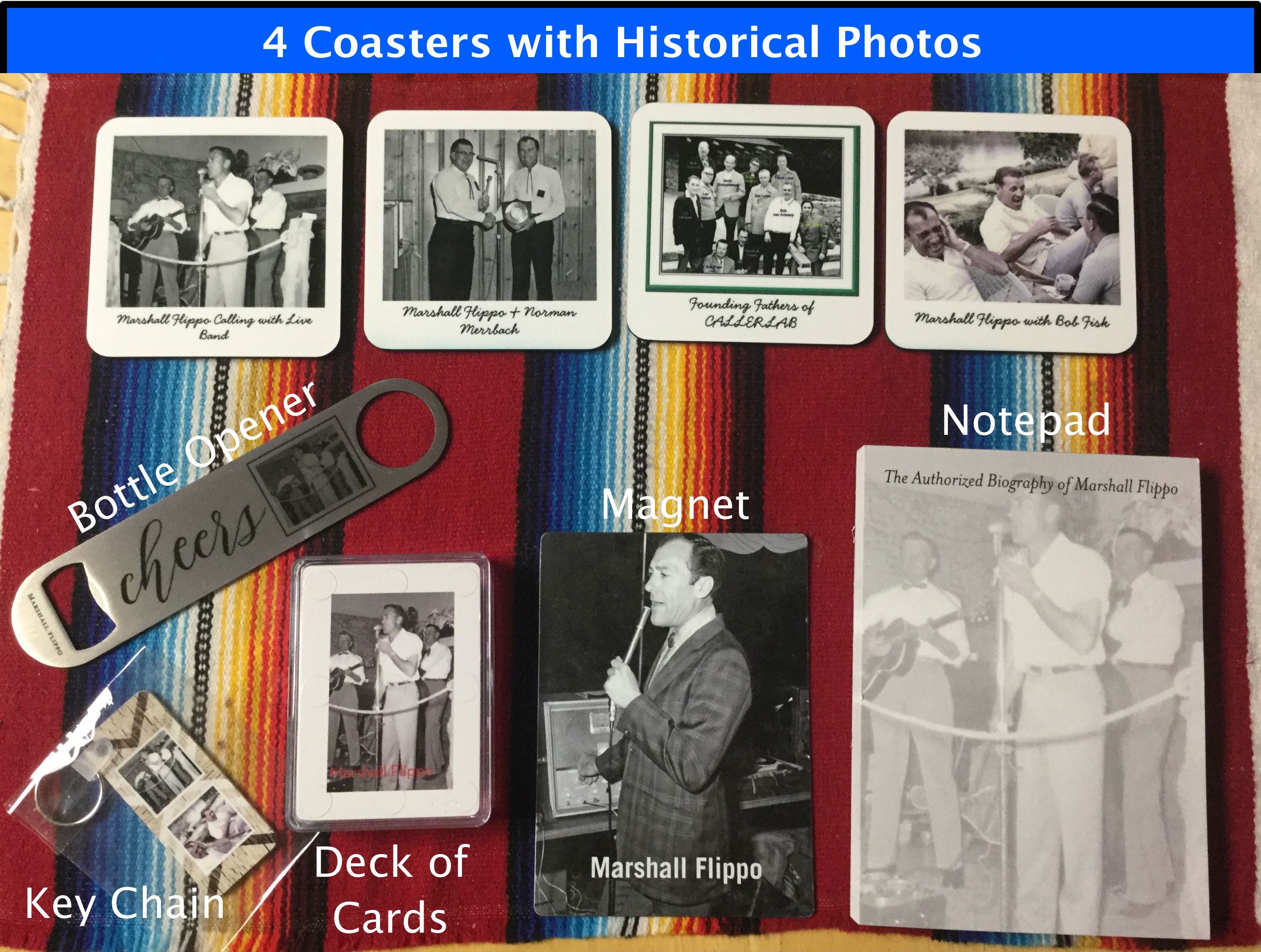
In 2020, I released the biography of the most famous square dance caller in the world, Marshall Flippo. I created a book pre-order system and had a monthly drawing for SWAG—items I purchased with his picture on them. Now that sounds expensive, but it wasn’t.

Inexpensive SWAG Sources:

I used two online photo companies:

I have bought from each of these fantastic companies regularly for several years, so the SWAG for Flippo’s book promotions cost me nothing but the shipping. Weekly I get advertisement from them, and often they offered several items for free—my cost, the shipping. So, I waited until one company offered the suitable items for free and ordered them. I stockpiled several for the Zoom Launch Party and gave them as door prizes.

Look at a sampling of some I bought:

SWAG Samples
Samples

I also made book bags, spiral notebooks, and coffee mugs. The most popular were the deck of cards and the coasters. In reality, the choices are limitless. If you do not receive emails from these companies, sign up for one or the other (or both if you create photo gifts). You’ll probably need to buy something to receive the emails with the free promotions.

Ultimately, the recipient of the SWAG connects it to your book and might encourage a sale or two. That’s its main purpose: advertisement for your book.

What do you do for SWAG? Share your ideas in the Comment section below.

Visit my website to find out about my new book, Coronavirus Reflections: Bitter or Better? and my other five books and three cookbooks: https://laradasbooks.com

Books · My Thoughts

Am I Invisible?

Am I invisible?

Am I invisible as an author to the world? Do books scare people so much? Where have all the readers gone? Are you out there?

In 2017, I am sitting at a craft fair in a small rural town in New Mexico. The subjects of my books are ranching, history and recipes—topics I thought dear to this population’s hearts. So I felt this would be a good place to sell my books. I came here the year before and did pretty well on sales, but this year I feel invisible.

I love to people watch, and country folk are my people, so seeing them is like looking in a mirror. As I sat there with my booth near the front door where everyone has to pass by, most people walked right on by like I’m not there—invisible. I offered free bookmarks to many and only a few refused, but I have to get their attention or they would walk right on by.

One young woman refused the free bookmark, then came back a few minutes later and looked at my books—I think she felt bad in refusing it.

A woman reading - invisible

It’s amazing to me to see how people ignore books. Any time I can, I gravitate towards books, but that’s the nature of a reader. I like paperbacks and hardbacks I can hold in my hands, turn back a page or mark up. I enjoy grabbing my iPad and reading on Kindle or iBooks. It just doesn’t matter. An enticing book comforts me in a way nothing else can. The pages transport me from the here and now to some other world, and time stands still!

I taught Language Arts and Literature for fourteen years in a middle school, and the decline in the ability to read and interest in reading broke my heart. Every year I taught, it worsened to the point I had to teach phonics to sixth graders.

What do you think? What is your experience? How do we create more readers?

Visit my website to find out about my six books and three cookbooks: https://laradasbooks.com